

This week The Guardian published an article about new research asserting that the number of flying insects has plummeted by 75% in the last 27 years. It seems timely to review a recording app that helps to monitor ladybirds in Britain.
iRecord Ladybirds is an app to help to identify ladybirds (and there are more different ones than you might think) and offers the opportunity to record your sightings. Records submitted are entered into a national database.
Ladybirds are diurnal (meaning that they are active during the day) so our odds of seeing them are high (especially given their standout colour!) I am now in the habit of looking for ladybirds and spot at least one every day. They don’t hide away and I have had the most sightings along roadside verges. Nettles seem to be popular hangout. Today I saw 13 in the space of ten minutes. I always like to take photos for recording them (although that’s tricky in amongst the nettles!)
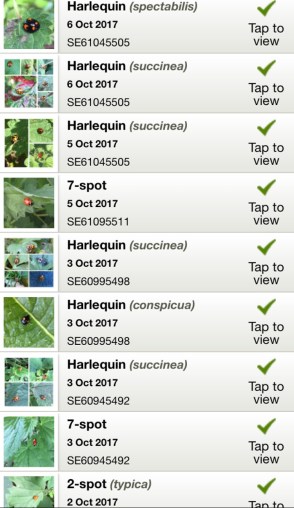
I first heard about the app about a year ago (the first sighting I recorded was 28/10/16) after reading an article about the rapid increase in harlequin ladybirds. The app keeps a record of your sightings so you can revisit what you’ve submitted at any time.
Here’s a screenshot of some of my submissions on my iPhone app.
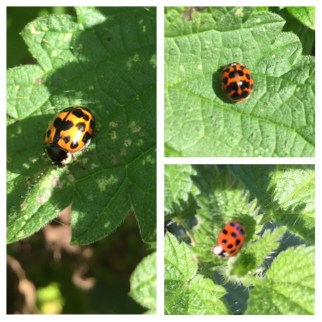
- These are all Harlequin (succinea) ladybirds even though the colours are slightly different and the number of spots vary. There are three types of harlequins but this is the one I see most often.
Harlequins are non-native and invasive. Their dramatic increase is having a detrimental effect on our native ladybirds. They are outcompeting them in terms of voracity and breeding.
Below are harlequins before adulthood. The first is a larva and the second a pupa.


Now is the time that you’ll likely see ladybirds come into your home to “overwinter”. If you do see any and they are native (i.e. not a harlequin!) and you don’t want them in the house please pop them somewhere like a garage or shed for shelter.
Pleasingly over the summer I have seen some 7-spot and 2-spot ladybirds but they have been few and far between. Perhaps I have been more vigilant through using the app but I don’t recall noticing any native ladybirds the previous summer.


I highly recommend the app. The illustrations are excellent for identifying ladybirds, there are good descriptions and it is very easy to use.
I also recommend that you follow Dr Helen Roy on Twitter @UKLadybirds and visit the Ladybird Survey site.
Thank you for reading. I do hope this post will encourage some folk to go out ladybird spotting and to maybe even start to contribute to vital research as a happy side effect!
 Mindful Nature